Hong Kong Guide: Food, Markets and Getting Around
Everything we cover about Hong Kong in one place: the food, the markets, the seasons, and how to get in and get around.
- Airport to the city: the Airport Express reaches Hong Kong Station in Central in 24 minutes, Kowloon in 22 (MTR timetable). Airport guide
- Visa: many passports get a visa-free stay, up to 180 days. Indian nationals must complete free online pre-arrival registration first (ImmD). Visa guide
- Paying for rides: an Octopus card works on the MTR, trams and the Star Ferry, and in many shops. Octopus guide
- Weather: July is the warmest month (mean 28.9°C) and January the coolest (16.5°C). June is the wettest (HKO 1991-2020 normals). Weather by month
- Typhoons: tropical cyclones can affect Hong Kong from May to November, most likely from July to September (HKO).
What to eat
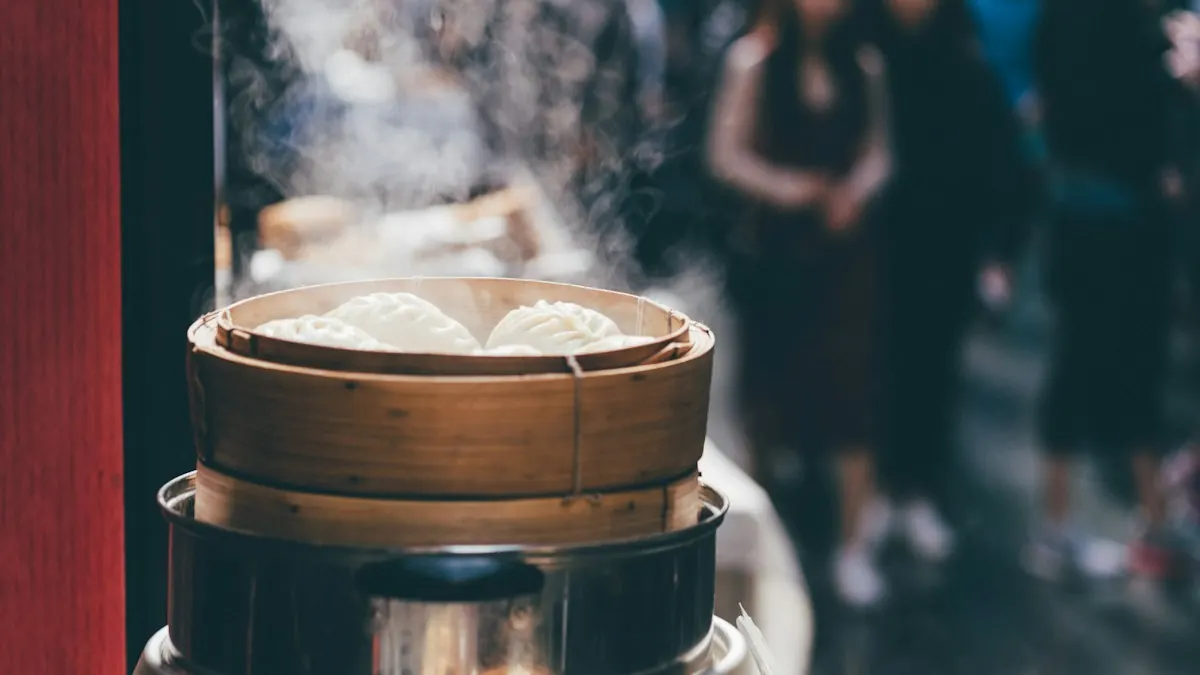
Hong Kong's everyday food is quick, cheap and made for sharing. The local café, the cha chaan teng, serves milk tea, egg tarts and long set-meal menus. Yum cha means tea and baskets of dim sum, eaten in the first half of the day. After dinner, people order tong sui, sweet soup.
Markets
Most neighbourhoods have a wet market, where fish sits on ice and greens are sold by the catty. Many public markets share a building with a cooked food centre, a cluster of small stalls that cook meals to eat on the spot. After dark, Temple Street turns into a night market of claypot rice and street snacks.
Seasons and festivals
The old Chinese calendar splits the year into 24 solar terms, and many festivals come with their own food: zongzi at Tuen Ng, mooncakes at Mid-Autumn and tangyuan at the winter solstice. Our calendar lists the terms with their dates and the local vegetables of each season.
Getting there and in
Hong Kong International Airport is on Chek Lap Kok, off Lantau Island. The Airport Express train, airport buses and taxis all run to the city. Before you fly, check whether your passport needs a visa or, for Indian nationals, pre-arrival registration.
Getting around
Most visitors ride the MTR, but two of the oldest rides in town cost only a few dollars: the double-decker tram along Hong Kong Island and the Star Ferry across Victoria Harbour. One Octopus card pays for all three.
Plan your trip
Short on time? Our three-day plan strings the food and market guides together: Kowloon markets and Temple Street on day one, yum cha, the tram and the Star Ferry on day two, and Sham Shui Po on day three.
Where to stay: we do not list hotels. Pick a base near an MTR station on a line you will use, and see our three-day plan for the areas we cover.
Frequently asked questions
What is Hong Kong best known for food-wise?
Everyday Cantonese food: dim sum at yum cha, milk tea and egg tarts at a cha chaan teng, sweet soup after dinner and street snacks such as fish balls and claypot rice at night markets.
How many days do you need in Hong Kong?
For the food and markets in our guides, three days lets you cover Kowloon, Hong Kong Island and Sham Shui Po at an easy pace. Our three-day itinerary sets out one way to do it.
Do I need a visa for Hong Kong?
It depends on your passport. The Immigration Department lets many nationals visit visa-free, for example 90 days for US citizens and 180 days for British citizens. Indian nationals get 14 days but must complete free online pre-arrival registration first.
What's the easiest way from the airport to the city?
The Airport Express train. The MTR timetable gives 24 minutes to Hong Kong Station in Central and 22 minutes to Kowloon, with trains about every 10 minutes.
- MTR, Timetable (Airport Express, effective from 13 September 2026): https://www.mtr.com.hk/en/customer/services/timetable_index.html
- Immigration Department (ImmD), Visit Visa / Entry Permit Requirements for the HKSAR (updated August 2026): https://www.immd.gov.hk/eng/services/visas/visit-transit/visit-visa-entry-permit.html
- Immigration Department (ImmD), Pre-arrival Registration for Indian Nationals: https://www.immd.gov.hk/eng/services/visas/pre-arrival_registration_for_indian_nationals.html
- Octopus Cards Limited, Octopus choices for tourists: https://www.octopus.com.hk/en/consumer/tourist/choices/index.html
- Hong Kong Observatory, Climate of Hong Kong: https://www.hko.gov.hk/en/cis/climahk.htm
- Hong Kong Observatory, Monthly Meteorological Normals for Hong Kong (1991-2020): https://www.hko.gov.hk/en/cis/normal/1991_2020/normals.htm
- The Star Ferry Company, Timetable & Fare: https://www.starferry.com.hk/en/service
- Hong Kong Tramways, Schedules and Fares: https://www.hktramways.com/en/schedules-fares
All checked 28 October 2026. Facts were taken from these sources and written in our own words. Photo: Unsplash License. Spotted something out of date? Tell us.