Tong sui: Hong Kong sweet soup and dessert shops
Sweet soup after dinner is a Hong Kong habit. Here is what tong sui is, how it began and which bowls to try.
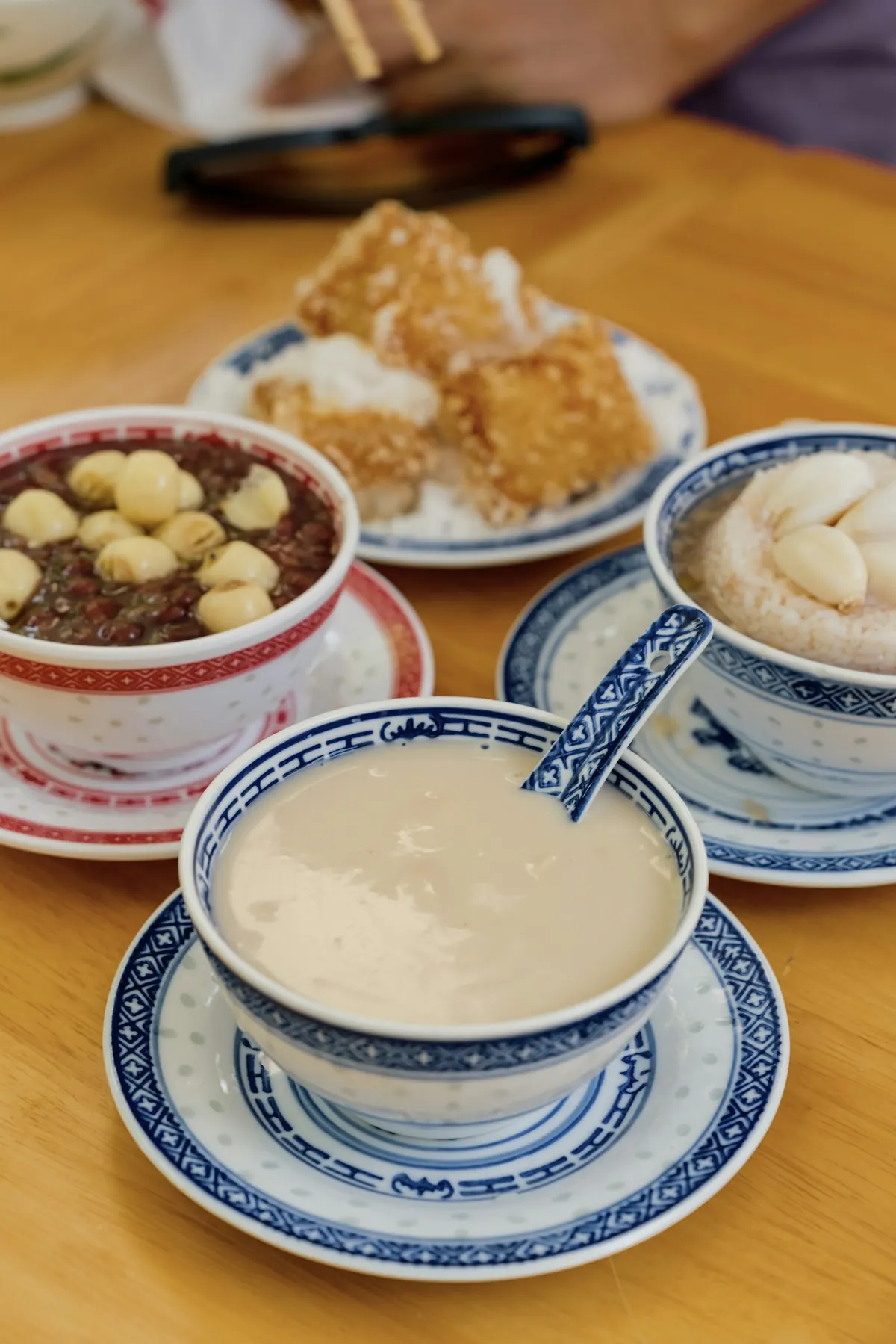
What is tong sui?
Tong sui (糖水) means "sugar water". It is the name for any sweet soup served as a dessert, usually at the end of a meal. You may also see it called tim tong (甜湯), "sweet soup".
Tong sui comes from the Lingnan region of southern China, which takes in Guangdong, Guangxi, Hainan, Hong Kong and Macau. The region is hot and humid and has long grown plenty of sugarcane, and both are linked to how the habit began. In a narrow sense, tong sui means the soupy desserts of Lingnan. In a wider sense, it covers soupy desserts across the Chinese-speaking world.
From Guangzhou to Hong Kong
- Early 20th century: tong sui shops open in Guangzhou. The first ones sell black sesame, mung bean, almond and sweet potato soups.
- 1930s: milk-based desserts, such as steamed milk curd, appear.
- After the Second World War: most of Hong Kong's dessert shops start up.
- 1980s and 1990s: fresh-fruit desserts, with a Western touch, become popular.
- 21st century: dessert chains grow, and the Hong Kong Tourism Board has recommended some as places for visitors to try.
Specialist tong sui shops are now found in Hong Kong, Guangdong and further afield, including Canada, Australia and the United States.
What to order
- Black sesame soup (芝麻糊): ground black sesame cooked with water and rock sugar. Thick, dark and nutty.
- Red bean soup (紅豆沙): red beans cooked until soft, then sweetened until the texture turns sandy.
- Sweet almond soup: ground almond cooked with sugar and water.
- Sweet walnut soup: ground walnut cooked with sugar, sometimes with milk.
- Sweet potato soup: peeled sweet potato cooked in syrup and water.
- Sai mai lo (西米露): small pearl tapioca in coconut milk and evaporated milk.
- Mango pomelo sago (楊枝甘露): a Hong Kong dessert of mango, pomelo, sago, coconut milk, evaporated milk and milk. It is credited to the Hong Kong restaurant group Lei Garden.
- Douhua (豆腐花): soft tofu pudding served with sweet syrup.
- Tangyuan (湯圓): glutinous rice balls in sweet soup, a dish that came to Hong Kong from Shanghai. Many families eat them at the winter solstice.
- Egg tong sui: a simple sweet soup with egg, popular in Hong Kong and southern China.
Nearby places have their own versions. Hainan's ching bo leung is an iced dessert of mung bean, pearl barley, red dates, fruit, syrup and ice. Macau's cha cha is a mix of beans in sugar water.
Hot or cold?
Black sesame, red bean, almond, walnut and sweet potato soups are cooked soups, and they are the oldest styles on the menu. Milk and fruit desserts, such as sai mai lo and mango pomelo sago, came later, and iced desserts such as ching bo leung are served cold. On a Hong Kong menu, 熱 means hot and 凍 means cold (as in 凍檸茶, iced lemon tea). If the menu does not say, ask which way it comes.
Where to eat it
Tong sui is served at the end of a meal in many Cantonese restaurants, and at dedicated tong sui shops. For a full meal first, try a cha chaan teng.
Frequently asked questions
What does tong sui mean?
Tong sui (糖水) means "sugar water". It is the Cantonese name for any sweet soup served as a dessert, usually at the end of a meal.
Where does mango pomelo sago come from?
Mango pomelo sago is a Hong Kong dessert of mango, pomelo, sago, coconut milk, evaporated milk and milk. It is credited to the Hong Kong restaurant group Lei Garden.
When did dessert shops start in Hong Kong?
Tong sui shops began in Guangzhou in the early 20th century. Most of Hong Kong's dessert shops started after the Second World War.
- Wikipedia, Tong sui: https://en.wikipedia.org/wiki/Tong_sui