Hong Kong wet markets: a beginner's guide
Fish on ice, red lamps and prices by the catty: how Hong Kong's fresh food markets work and how to shop in one.
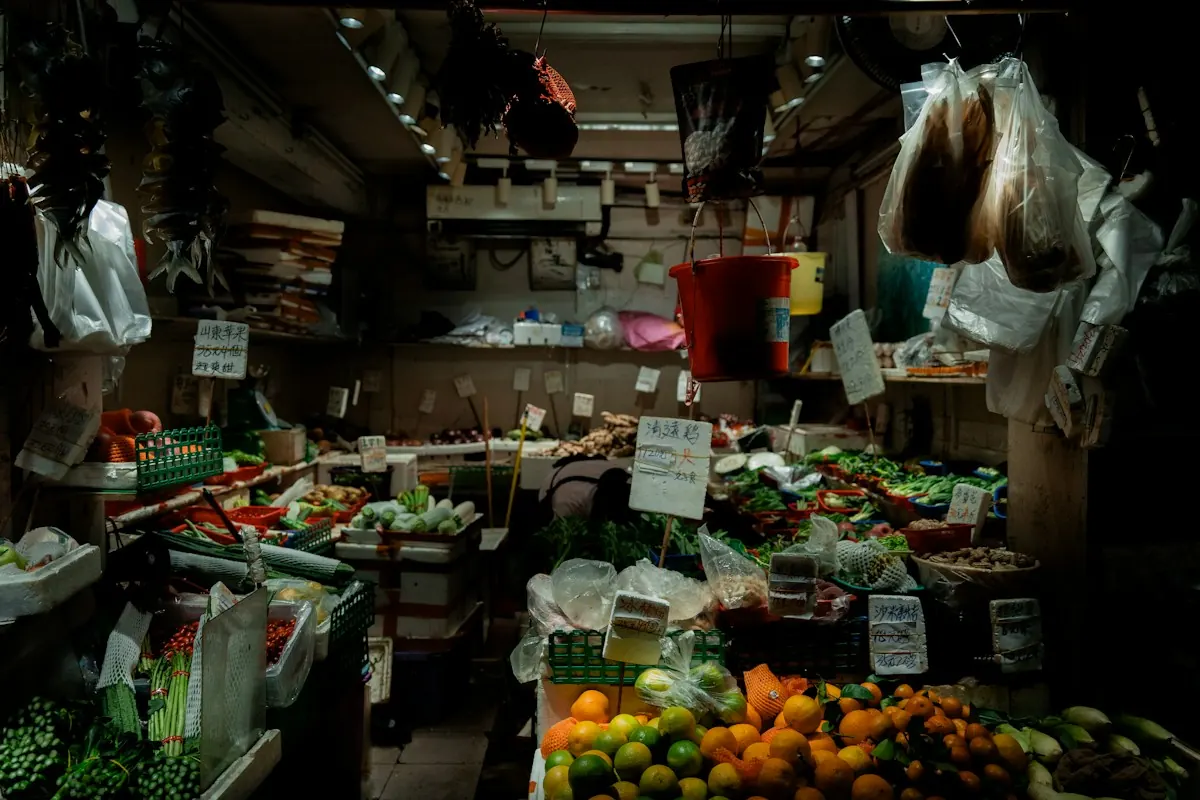
What is a wet market?
A wet market is a market that sells fresh food, such as fish, meat and produce, outside a supermarket. In Cantonese, Hong Kong people simply say gaai si (街市), "street market".
The "wet" is literal. Stalls keep fish and fresh food cold on ice, which melts. Fish and meat stalls are washed down and produce is sprayed with water, so the floors stay damp all day. Wear shoes you do not mind getting wet.
Most Hong Kong neighbourhoods have at least one market. Older residents, families on low incomes and domestic helpers are their main customers, and visitors come to see everyday Hong Kong life up close.
A short history
Large public markets have operated in Hong Kong since at least 16 May 1842, when Central Market opened on Queen's Road. It sold meat, fruit and vegetables, poultry, salt fish and fresh fish, and had weighing rooms and money changers.
In Kowloon, Reclamation Street Market opened in 1920. The government removed it in 1953 because of structural problems, and Yau Ma Tei Street Market opened in 1957 to replace it.
Markets still matter. In 1994 they accounted for 70% of Hong Kong's produce sales.
Who runs the markets?
Until the end of 1999, the Urban Council ran markets on Hong Kong Island and in Kowloon, and the Regional Council ran those in the New Territories. Since 2000 the Food and Environmental Hygiene Department (FEHD) has managed public markets.
The FEHD says it provides 93 public markets and cooked food markets or centres, with some 13,100 stalls. They sell fresh produce, cooked food, clothing and household goods, and some have service trade stalls. The Housing Authority ran another 21 markets and private developers about 99 more (2017 figures).
Open-air street markets
Many markets now sit inside government buildings, but some still spill onto the street. Graham Street Market in Central runs up the steep section of Graham Street between Queen's Road Central and Hollywood Road. It is said to date back more than 160 years, making it one of Hong Kong's oldest street markets still trading. Fresh food and fruit stalls line both sides of the narrow street. The Urban Renewal Authority is redeveloping the Graham Street and Peel Street area, so it is worth seeing while you can.
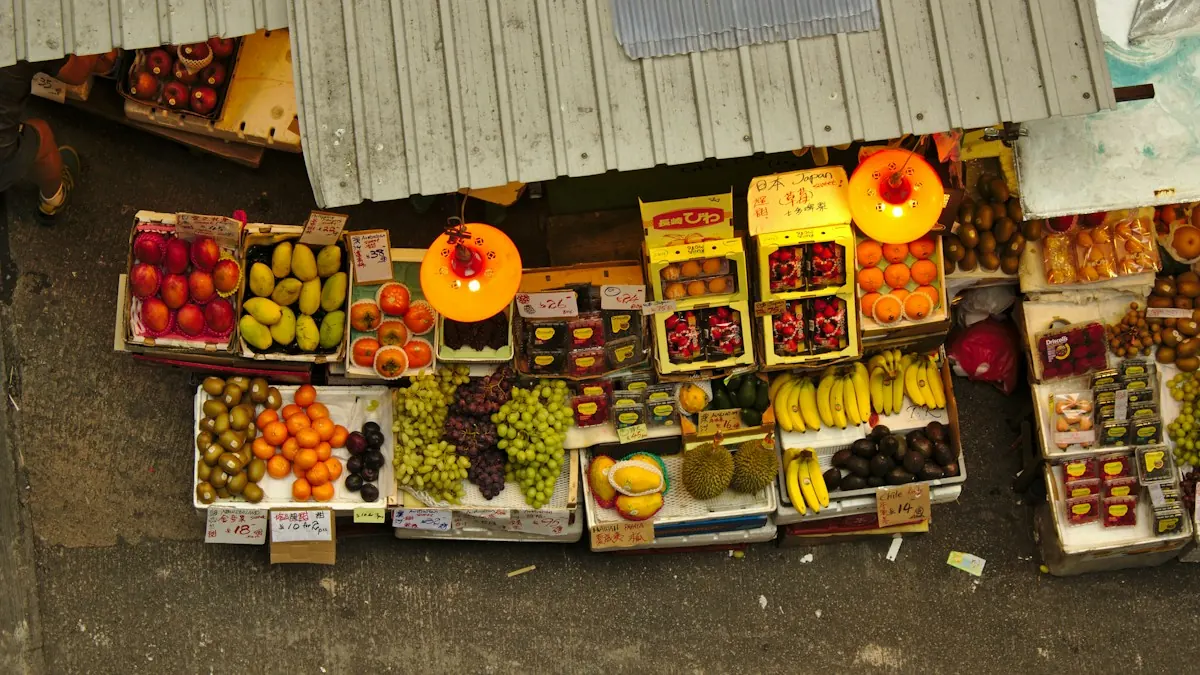
What you will see
- Fish and seafood, kept cold on ice.
- Vegetables and fruit, sold by weight. See the seasonal vegetables on our market calendar.
- Poultry stalls. At the end of 2016, 85 retail shops in public markets were licensed to sell live poultry. Birds may not be kept overnight, and stalls must finish slaughtering by 8 pm.
- Red lampshades. Many stalls hang red lamps over their counters to make the food look fresher.
Dried, salted and preserved
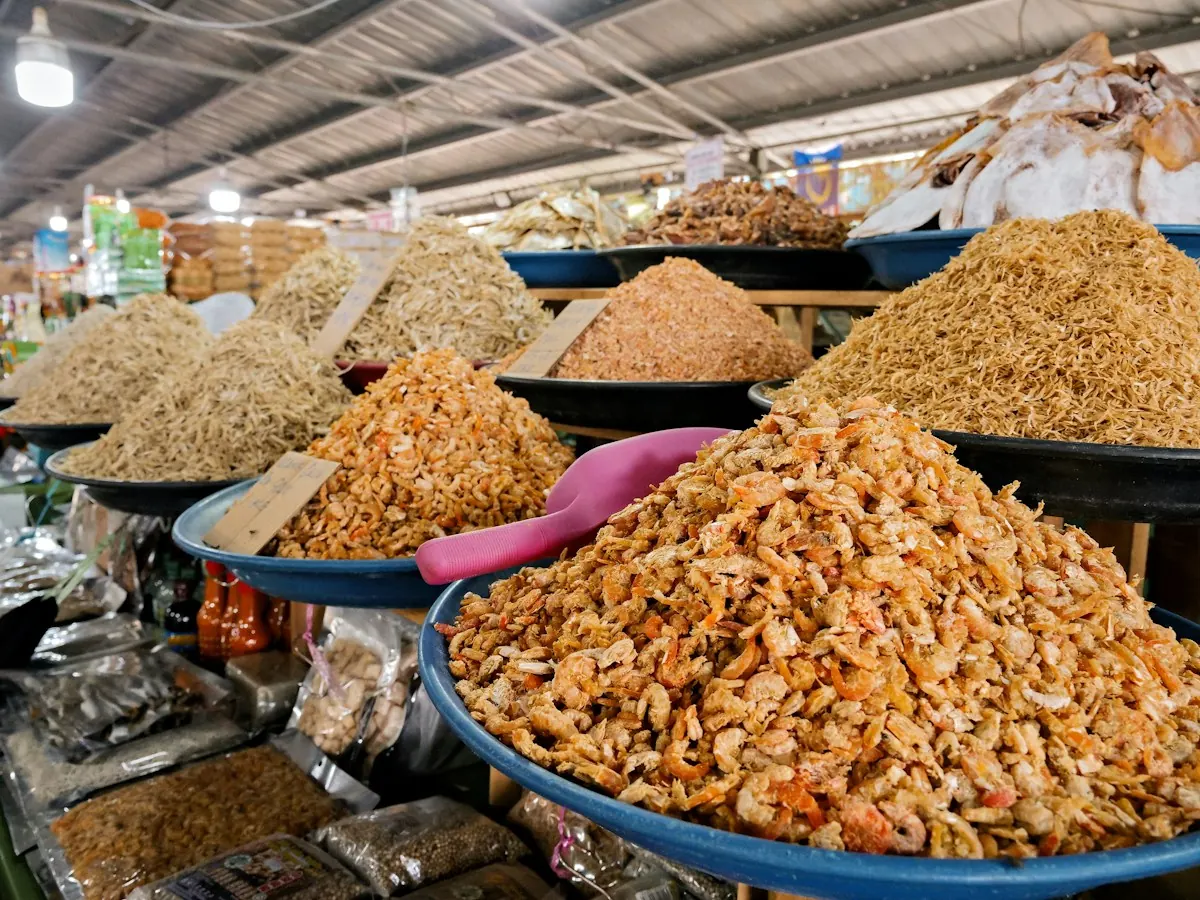
Keeping food by salting and drying is as old as Hong Kong's markets: salt fish was on sale at Central Market when it opened in 1842. Today you will still find trays of dried shrimp, small dried fish and jars of preserved fruit at many stalls, sold by weight like everything else.
Market guides
Heading to east Kowloon? Our guide to Ngau Chi Wan Market and Cooked Food Centre covers its opening hours, what the stalls sell and the story of the neighbourhood around it.
Market words
- 街市 (gaai si): market. Literally "street market".
- 斤 (catty): the unit most stalls price by. One Hong Kong catty is about 605 g.
- 兩 (tael): one sixteenth of a catty, about 37.8 g.
- 熱 / 凍: hot / cold, on a cooked food stall's menu.
Hungry after shopping? Read our guide to the cha chaan teng, Hong Kong's everyday café.
Frequently asked questions
Why is it called a wet market?
Stalls keep fish and fresh food on ice, which melts, and the counters are washed down and the produce sprayed, so the floors stay wet.
How many public markets does Hong Kong have?
The Food and Environmental Hygiene Department says it provides 93 public markets and cooked food markets or centres, with some 13,100 stalls.
How much is a catty?
One Hong Kong catty is 604.79 g, about 605 g. It is split into 16 taels of about 37.8 g each.
- Wikipedia, Wet market: https://en.wikipedia.org/wiki/Wet_market
- Wikipedia, Wet markets in Hong Kong: https://en.wikipedia.org/wiki/Wet_markets_in_Hong_Kong
- Food and Environmental Hygiene Department, Public markets: https://www.fehd.gov.hk/english/pleasant_environment/tidy_market/overview.html
- Wikipedia, Graham Street Market: https://en.wikipedia.org/wiki/Graham_Street_Market
- Wikipedia, Catty: https://en.wikipedia.org/wiki/Catty