Dongzhi: How Hong Kong Eats on the Winter Solstice
The longest night of the year is a family night in Hong Kong: when Dongzhi falls in 2026, what it means and what goes on the table.
When is Dongzhi in 2026?
In 2026 the Winter Solstice falls on Tuesday 22 December, according to the Hong Kong Observatory's 2026 calendar table. On the Chinese calendar that is the 14th day of the 11th lunar month.
Dongzhi (冬至) is the 22nd of the 24 solar terms. It starts when the Sun reaches 270° on its yearly path, which in most years means 21 or 22 December. In the northern hemisphere it is the day with the shortest daylight and the longest night. You can see where it sits among the other terms in our 24 solar terms market calendar.
The name is easy to read once you know the two characters. 冬 means winter and 至 means "extreme", so the word points to the peak of winter, much like "midwinter" in English.
A festival as big as New Year
People in China first marked the day in the Zhou dynasty, and it became an official celebration under the Han dynasty, when people took a break from work to be with their families. In old times it was also called the "festival of extreme length", because the low winter Sun casts the longest shadows of the year. It was traditionally a very important holiday, often compared to Chinese New Year.
The idea behind it comes from yin and yang. After the longest night, the days start to grow longer again, so the festival stands for light returning and for balance. Families honoured their ancestors, for example by burning joss paper at the family shrine. In some clans, people who share a surname still gather at their ancestral temple to worship, followed by a big reunion dinner.
There is one more old belief. Many Chinese people, especially older ones, say you become a year older right after the Dongzhi meal, rather than waiting for Chinese New Year.
Dongzhi in Hong Kong
In Hong Kong, Dongzhi is above all a night for a family dinner. Many businesses let staff leave work early so they can spend time with their families, and in some areas shops close for the holiday.
Is it a public holiday? No. The Winter Solstice is not on the Hong Kong government's list of general holidays for 2026. It does appear on the Labour Department's list of statutory holidays, but as a choice: "Chinese Winter Solstice Festival or Christmas Day (at the option of the employer)". In 2026 that means 22 December or 25 December, depending on what your employer picks.
Tangyuan: the dish of the night
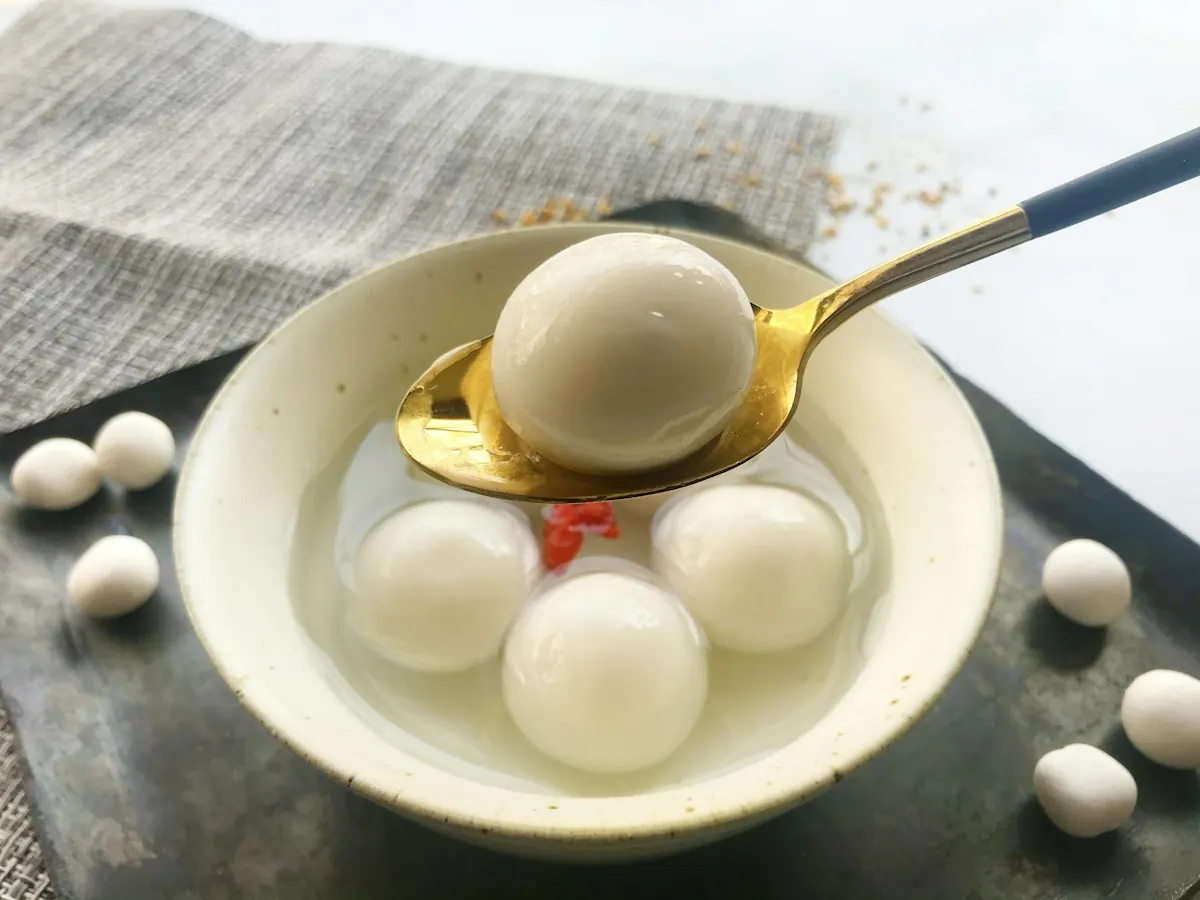
The food most linked with Dongzhi is tangyuan (湯圓, tong yuen in Cantonese). These are small balls made from glutinous rice flour, cooked and served in the same bowl as a sweet soup or a savoury broth. Their round shape stands for reunion, which is why families make and eat them together. Some are coloured pink or green. By custom, each person gets at least one large ball as well as several small ones.
The Hong Kong Tourism Board describes tong yuen as chewy balls served in soup or syrup, with sweet fillings such as peanut, black sesame and red bean paste, and also chocolate. Their round shape, it says, signifies togetherness, so they are best shared with family. Tangyuan in sweet soup is also part of the wider family of Hong Kong desserts; read about it in our tong sui sweet soup guide.
Tangyuan are also often served with jiuniang, a mild, unfiltered rice wine that still contains whole grains of glutinous rice.
Other winter solstice dishes
There is no single fixed menu, and each family has its own favourites. Dishes traditionally eaten at Dongzhi include:
- Winter Solstice dumplings (冬至糰): their name sounds like the word for "reunion". They are shared with friends and relatives as a blessing, and are sometimes shaped like animals.
- Hot pot: a pot of simmering broth in the middle of the table, where everyone cooks their own food.
- Wontons: small filled dumplings, usually served in soup.
- Shuijiao: boiled dumplings, the favourite in northern China.
Shopping for the Dongzhi dinner
You do not have to make tangyuan from scratch. The Hong Kong Tourism Board notes that frozen tong yuen are sold at most local supermarkets, and local dessert shops serve them too.
For the rest of the meal, the wet market is the place to go. December is in the cool season, when Hong Kong farms grow winter-spring vegetables such as spinach, watercress, Chinese kale and chayote, as listed in the in-season section of our market calendar. In rural China, the solstice was also the time to harvest winter crops such as wheat, barley and radishes. New to market shopping? Our Hong Kong wet market guide explains how the stalls, prices and weights work.
Frequently asked questions
When is Dongzhi in 2026?
The Hong Kong Observatory lists the Winter Solstice on Tuesday 22 December 2026, the 14th day of the 11th lunar month.
Is the winter solstice a public holiday in Hong Kong?
It is not on the government's list of general holidays for 2026. The Labour Department lists it as a statutory holiday option: employers give either the Winter Solstice (22 December) or Christmas Day (25 December).
Why do people eat tangyuan at Dongzhi?
Tangyuan are round glutinous rice balls, and the round shape stands for reunion and togetherness. Families make and eat them together, often in sweet soup with fillings such as black sesame, peanut or red bean paste.
What else do families eat on the winter solstice?
Dishes linked with Dongzhi include Winter Solstice dumplings, hot pot and wontons, while shuijiao dumplings are popular in northern China. Each family has its own menu.
- Hong Kong Observatory, Gregorian-Lunar Calendar Conversion Table of 2026 (Winter Solstice: 22 December 2026): https://www.hko.gov.hk/en/gts/time/calendar/text/files/T2026e.txt
- Hong Kong Observatory, The 24 Solar Terms: https://www.hko.gov.hk/en/gts/time/24solarterms.htm
- Labour Department, Statutory Holidays for 2026: https://www.labour.gov.hk/eng/news/latest_holidays2026.htm
- GovHK, General Holidays for 2026: https://www.gov.hk/en/about/abouthk/holiday/2026.htm
- Wikipedia, Dongzhi Festival: https://en.wikipedia.org/wiki/Dongzhi_Festival
- Hong Kong Tourism Board (Discover Hong Kong), Traditional Dishes to Eat During Chinese New Year (tong yuen section): https://www.discoverhongkong.com/eng/food-and-drink/traditional-dishes-to-eat-during-chinese-new-year.html
- AFCD, Local common vegetables: winter-spring crops: https://www.afcd.gov.hk/english/agriculture/agr_useful/agr_useful_local/agr_useful_local_win.html
All checked 22 October 2026. Facts were taken from these sources and written in our own words. Photo: Unsplash License. Spotted something out of date? Tell us.