Dim Sum in Hong Kong: What to Order and How Yum Cha Works
Tea first, then baskets of small dishes to share: what to order at yum cha and how the meal works.
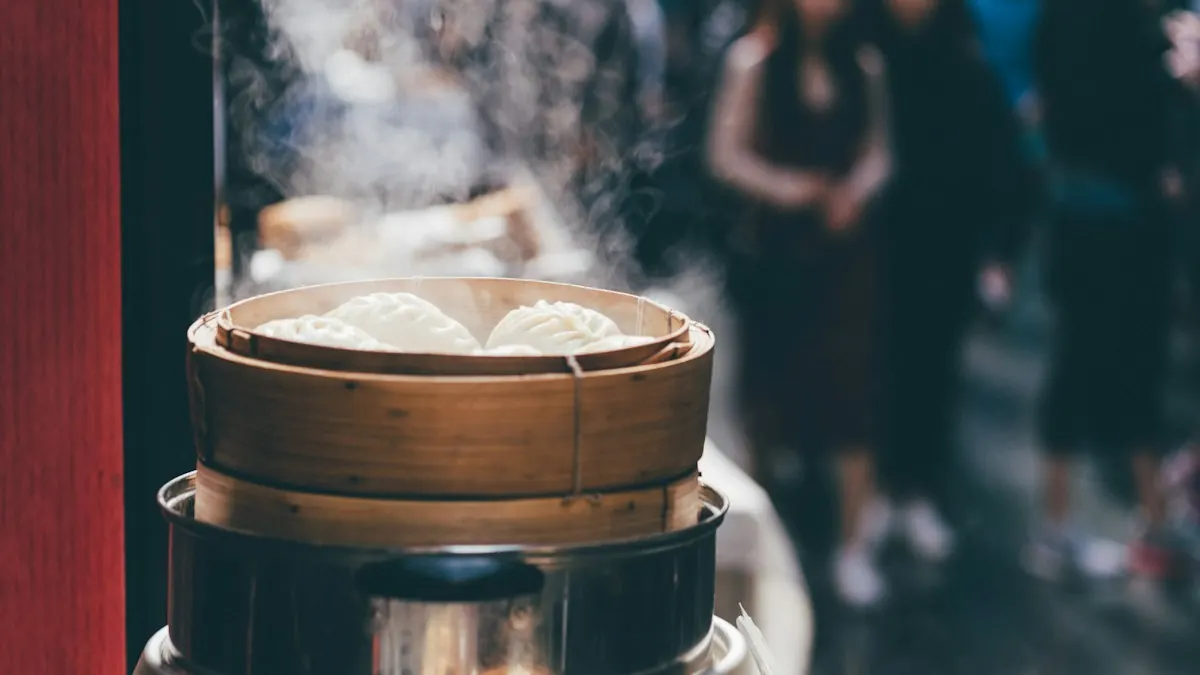
What is dim sum?
Dim sum (點心) is a meal of small Cantonese dishes, savoury and sweet, eaten with Chinese tea. The Hong Kong Tourism Board calls it a classic Hong Kong dining experience and says there are more than 1,000 dishes to choose from.
Going out for dim sum is called yum cha (飲茶), which means "drink tea". The tea matters as much as the food. It is a meal for sharing, so it works best with family or a group of friends.
Where yum cha came from
Yum cha goes back to the tenth century in Guangzhou (Canton). As trade brought more travellers to the city, they stopped at teahouses for tea and a small bite. An old phrase sums it up: jat zung loeng gin (一盅兩件), "one cup, two pieces", meaning one cup of tea with two small dishes. The words "dim sum" are often translated as "touch the heart", the name for those little snacks served with tea.
Dim sum moved south to Hong Kong as well. During the Chinese Civil War (1927 to 1949), many dim sum chefs left mainland China and settled in Hong Kong, where they kept refining the dishes.
Six dishes to order first
The dim sum menu is long, but these six classics, picked by the Hong Kong Tourism Board for beginners, make a good first order.
- Siu mai (燒賣): open-topped dumplings of pork, shrimp and mushroom in a yellow wrapper, finished with fish roe or diced carrot. Fancier versions may add scallop, goji berries or caviar, and street stalls often sell them on a stick.
- Har gow (蝦餃): shrimp dumplings in a thin, see-through wrapper. A good one has at least seven pleats, a test of the chef's skill. Eat them hot from the steamer.
- Char siu bao (叉燒包): soft buns filled with barbecue pork in a sweet sauce. The steamed bun is fluffy and light. The baked cousin, char siu so (barbecue pork puffs), has a crisp, flaky crust.
- Lo mai gai (糯米雞): sticky rice with chicken, mushrooms and Chinese sausage, wrapped in a lotus leaf and steamed. The leaf gives the rice an earthy smell.
- Cheung fun (腸粉): steamed rice noodle rolls with a sweet soy sauce poured over. Try the shrimp or the barbecue pork filling.
- Egg tarts (蛋撻, dan taat): smooth custard in shortcrust or puff pastry. You will see the traditional Cantonese kind and the caramelised Portuguese-style tart, which was inspired by Macao. They are a cha chaan teng favourite too, see our cha chaan teng guide.
How yum cha works
Tea comes first. Staff usually start by asking which tea you would like.
Ordering. In traditional dim sum halls, servers push carts of steaming baskets between the tables and you pick what you want as it passes. Each order is marked on a bill card that stays on your table, with a rubber stamp or a pen. Many newer restaurants use an order sheet or a computer system instead of carts.
When to go. Dim sum is traditionally eaten as a brunch, in the morning and around midday, so plan yum cha for the first half of the day.
Dim sum etiquette
- Pour for others. By custom, the person sitting nearest the teapot pours tea for everyone else, and younger diners often pour for older ones.
- Say thanks with two fingers. When someone fills your cup, you can tap your index and middle fingers twice on the table to say thank you. A popular legend says the habit began when an emperor, travelling in disguise, poured tea for his servant. The servant could not bow without giving the emperor away, so he tapped his fingers on the table instead.
- Share the table. Dim sum is made for groups. Many restaurants put a lazy susan in the middle of the table so everyone can reach the food and the tea.
Vegetarian dim sum
Many classics, such as siu mai, har gow and char siu bao, contain pork or shrimp, so vegetarians need to choose with care. One dish to look for is the vegetarian soy skin roll. Some teahouses in Hong Kong serve only vegetarian dim sum, and the Hong Kong Tourism Board's restaurant list below includes one. If you are not sure what is in a dish, ask the staff before you order.
Dim sum and Hong Kong heritage
Hong Kong counts dim sum as part of its living culture. "Chinese Dim Sum Making Technique" was in the city's first Intangible Cultural Heritage Inventory in June 2014, and it is still on the updated inventory, which grew to 507 items in December 2024. The inventory notes that Hong Kong's Chinese restaurants have served many kinds of dim sum since the 1950s, changing with the seasons, from savoury and sweet dim sum to buns. Even the basket has its own entry: steamer making, the craft of cutting the bamboo, fitting the parts together and weaving the base of the steamers that dim sum is cooked in.
Where to eat dim sum in Hong Kong
Looking for the best dim sum in Hong Kong? We do not rank restaurants. For ideas, see the Hong Kong Tourism Board's own pick of unmissable Hong Kong dim sum restaurants. Opening hours and menus change, so check with the restaurant before you go.
Still hungry? End the day with a bowl of tong sui sweet soup.
Frequently asked questions
What does yum cha mean?
Yum cha means "drink tea". It is the Cantonese name for going out to eat dim sum, the small dishes served with Chinese tea.
What is the difference between har gow and siu mai?
Har gow are shrimp dumplings in a thin, see-through wrapper with at least seven pleats. Siu mai are open-topped dumplings of pork, shrimp and mushroom in a yellow wrapper, topped with fish roe or diced carrot.
Why do people tap the table at dim sum?
Tapping the index and middle fingers twice on the table is a way to say thank you when someone pours your tea. A legend links it to an emperor who poured tea for his servant while travelling in disguise.
Is dim sum on Hong Kong's heritage list?
Yes. Chinese Dim Sum Making Technique was in Hong Kong's first Intangible Cultural Heritage Inventory in June 2014 and is on the current inventory.
- Hong Kong Tourism Board (Discover Hong Kong), 6 Must-Order Dim Sum for Beginners: https://www.discoverhongkong.com/eng/food-and-drink/a-beginner-s-guide-to-dim-sum-must-order-dishes.html
- Hong Kong Tourism Board (Discover Hong Kong), 6 Unmissable Hong Kong Dim Sum Restaurants: https://www.discoverhongkong.com/eng/food-and-drink/unmissable-hong-kong-dim-sum-restaurants.html
- Intangible Cultural Heritage Office (LCSD), ICH Inventory of Hong Kong: https://www.icho.hk/en/web/icho/ich_inventory_of_hong_kong.html
- ICHO, Intangible Cultural Heritage Inventory of Hong Kong (2024 list, items 5.29 and 5.79): https://www.icho.hk/documents/Intangible-Cultural-Heritage-Inventory/2024/ich_inventory_2024_en.pdf
- Wikipedia, Dim sum (history and traditions): https://en.wikipedia.org/wiki/Dim_sum
All checked 22 October 2026. Facts were taken from these sources and written in our own words. Photo: Unsplash License. Spotted something out of date? Tell us.